Irish Pub NYC Places to Unwind After a Long Day
There are nights in New York when the city feels less like a grid and more like a pressure cooker. The subway was late, the inbox kept filling, dinner plans fell apart, and by 7 p.m. All you want is a room that asks nothing of you. Not a velvet-rope cocktail lounge. Not a sports bar with twenty screens screaming at once. Something steadier than that. A good Irish pub can do the job better than almost any other kind of place in the city.
That is partly because the best ones understand pace. They know how to hold a crowd without making it feel frantic. You can slip in for one quiet pint and a bowl of soup, or settle at a corner table with coworkers and let the evening stretch. A proper Irish Pub NYC regulars return to is rarely about novelty. It is about reliability, warmth, and the small comfort of walking into a room where the lighting is forgiving, the bartender notices when your glass is getting low, and the menu has at least three things you would actually want to eat after a hard day.
New York has no shortage of bars claiming Irish roots, but the category covers a wide range. Some are neighborhood institutions with polished wood, framed county crests, and bartenders who can pull a Guinness with patience rather than speed. Others lean louder and younger, especially near transit hubs and office districts where happy hour can feel like a contact sport. If your goal is to unwind, that difference matters. The room itself becomes part of the remedy.
What makes an Irish pub a real decompression zone
A pub earns repeat business after work through feel as much as food or drink. The best rooms have a low, even hum rather than a jagged wall of sound. Music stays present but not oppressive. The televisions, if there are televisions, do not dominate every sightline. People can laugh without shouting. Staff know when to chat and when to leave you alone.
Comfort in this context is not accidental. It comes from details that seasoned pub owners understand instinctively. Tables are spaced close enough to feel convivial, but not so tight that every conversation bleeds into the next. The bar top has enough depth for a proper plate and a pint. Coats can be hung somewhere sensible in winter. Restrooms are kept in working order even late into the evening, a small but revealing sign that management is paying attention.
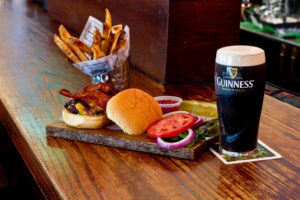
Then there is the food. For anyone leaving work tired and underfed, a pub that treats dinner as more than an afterthought has a clear edge. Shepherd’s pie, fish and chips, Irish curry chips, a roast chicken sandwich, a bowl of stew, soda bread with real butter, these are not delicate dishes, and that is exactly the point. They settle you. A surprisingly large share of after-work disappointment in Manhattan comes from bars that serve drinks well but food poorly. A solid Irish pub usually avoids that trap because hospitality, in the old sense of the word, is built into the format.
The drinks matter too, of course, but not only in the obvious way. A good pint poured correctly slows things down. Guinness is the classic example. When it is handled with care, not rushed, not foamy and thin, not left to die on the counter, it arrives as its own kind of ritual. Even for people who do not normally drink stout, there is something calming about the pause built into the pour. Whiskey drinkers find a similar comfort in a back bar stocked for actual breadth rather than decorative effect. Irish whiskey, a blend or single malt, neat or with one cube, can feel far more restorative than another sugary cocktail no one really wanted.
Not every Irish Pub NYC offers the same kind of night
One of the easiest mistakes is talking about the Irish pub scene in New York as if it were uniform. It is not. A Financial District pub at 6 p.m. On a Thursday behaves differently from one in the West Village at 9 p.m., and both differ from a long-running neighborhood place in Queens or the Bronx. If the goal is to unwind, it helps to know what sort of evening you are shopping for.
Near office corridors, especially in Midtown and the Financial District, many Irish pubs function as pressure-release valves for workers leaving towers all at once. There is energy in that, and on the right day it can be exactly what you want. A first round with colleagues, a burger, some laughter, then home. But these pubs can tip quickly from lively to crowded. If your ideal evening involves reading messages in peace, decompressing after a client meeting, or speaking in a normal tone, timing is everything. Showing up at 5:15 can feel civilized. Arriving at 6:30 can feel like entering a train platform with beer taps.
Downtown and in the Village, the mood often opens up. There may be more character in the room, more neighborhood regulars, and a little more patience in the service. That does not always mean quiet. It does mean the crowd is less purely transactional. People are not all racing the same clock. In places like this, you can sometimes sense who has been coming for years. That continuity changes the atmosphere. Even a newcomer benefits from a room that already knows how to settle into itself.
Outer borough pubs often offer the strongest version of what many people picture when they hear the phrase Irish pub. Less performative, more rooted, often a touch roomier, and frequently better value. You might see families at early tables, retired regulars near the bar, and workers still in boots or uniforms grabbing a bite before heading home. There is a grounded quality to these places that can be rare in more central Manhattan spots. If you have the time and live nearby, these are often the pubs that make a rough day feel manageable again.
The neighborhoods that reward a little intention
Choosing the right neighborhood changes the entire experience. This is one of those cases where ten minutes of planning can spare you an hour in a place that misses the mark. New York is dense, but emotional distance matters as much as physical distance after work. Sometimes the best pub is not the one closest to the office, but the one that gives you just enough separation from the day.
Midtown wins on convenience. If you work near Bryant Park, Grand Central, Herald Square, or the avenue spine of corporate Manhattan, you will find no shortage of Irish spots. Some are handsome, historic-feeling rooms that serve dependable food and understand how to move a crowd. Others are pure throughput, built for speed rather than comfort. In Midtown, the trick is to favor places with side rooms, deeper dining spaces, or bars that attract a mixed-age crowd instead of only the post-analyst stampede.
The Financial District can be excellent if you catch it at the right hour. Early evening often has a pleasant release to it. After the workday empties out, some streets become quieter faster than people expect. A pub there can feel surprisingly cocooned, especially if it has old wood interiors and a menu that goes beyond the usual fried staples. On the wrong night, though, especially during major sports events or Thursday networking spillover, the same place can become boisterous enough to defeat the whole purpose.
The West Village and Greenwich Village are better for those who want atmosphere without too much corporate spill. Good pubs here can support several kinds of evening at once. Someone can be on a date in one corner, a pair of old friends can be deep into a second whiskey in another, and a solo diner can sit at the bar unnoticed except when he or she wants service. That flexibility is a mark of a mature room.
Queens and parts of Brooklyn deserve far more attention in this conversation than they usually get. In neighborhoods with long Irish or Irish American ties, the pubs often feel less like concepts and more like civic spaces. That may sound grand for a bar, but anyone who has spent enough time in one knows it is true. These places host birthdays, post-funeral gatherings, football mornings, and Tuesday dinners for people who know the servers by name. If what you need after a long day is not just a drink but a sense of being folded back into ordinary human company, these pubs are hard to beat.
Food that helps the night land softly
People underestimate how much dinner quality affects mood after work. A rushed drink on an empty stomach usually sharpens fatigue. A proper plate changes the angle of the evening. This is another reason the best Irish pubs work so well as decompression spaces. Their menus are built for appetite, weather, and stamina.
Classic pub fare can be heavy, but heavy is not the same as careless. The best kitchens get the fundamentals right. Fish and chips should have batter that cracks rather than slides off in an oily shell. Shepherd’s pie should taste like it was seasoned on purpose, not as an obligation. A steak sandwich should come on bread sturdy enough to hold up, with fries crisp enough to survive the walk from kitchen to table. Even simple soup and brown bread can be exactly right on a cold evening.
There is also a practical virtue to pub menus that office-district bars often miss. You can usually order quickly without negotiating a maze of small plates and house specials. After a long day, that matters. No one wants to perform enthusiasm for charred shishitos and whipped feta when what they really want is a hot meal and ten minutes of peace.
For those who do not drink much, or at all, Irish pubs can still be excellent choices. Tea service is often better than in trendier bars. Coffee may appear after dinner without any fuss. Many places now carry decent nonalcoholic beer, and the structure of the room does not force everyone into cocktail culture. You can comfortably have a burger and club soda without feeling like you missed the point.
The drink order that fits the mood
There is no heroic prize for ordering something complicated when you are already drained. In a good pub, the best order is often the simplest one. A pint, a whiskey, or a straightforward highball matches the setting and lets the staff do what they do well. That is not snobbery. It is fit. Some rooms are designed around pints and conversation, not around seven-ingredient signatures with smoke trapped under glass.
A few reliable after-work orders tend to suit the setting:
- A pint of Guinness, especially if the bar takes pride in it.
- Smithwick’s or another Irish red ale when you want something lighter but still malty.
- Irish whiskey neat, or with a small splash of water.
- A whiskey ginger if you want one mixed drink that will not fight the menu.
- A half pint and a bowl of soup when you are tired enough to want restraint.
That last option deserves more credit than it gets. Not every hard day requires a full session. Sometimes the restorative move is one measured drink, something warm to eat, and a short walk home.
Timing is half the strategy
Even an excellent pub can feel wrong if you hit it at the wrong moment. Office-heavy areas in particular change personality by the half hour. For people who genuinely want to unwind, not just drink, the sweet spot often falls earlier than expected. Arriving before the main rush can buy you a better stool, faster service, and a quieter room. You get to exhale before the crowd converts the place into a social engine.
If you need solitude, the period between roughly 4:30 and 5:30 often works best in business districts. If what you want is companionship and a little buzz in the room, 6 p.m. To 7 p.m. Can be ideal. After that, the trade-off shifts. You may gain atmosphere but lose ease. Solo visitors especially should think about this. There is a big difference between sitting at a polished bar with room for your plate and trying to wedge yourself into a second-row standing crowd while balancing a coat and briefcase.
Weather changes the equation too. Rain pushes everyone indoors at once. Cold nights drive demand for booths and hot food. The first warm Thursdays of spring can produce instant overflow. December brings its own chaos, with office parties and tourists crowding places that are usually manageable. None of this means avoiding Irish pubs during peak times. It simply means choosing with eyes open.
What regulars notice, and why it matters
People who spend time in pubs develop a feel for quality that goes beyond décor. A room can look perfect in photos and still wear badly in person. A few signs separate a dependable after-work pub from one that is just selling the idea of one.
Watch the staff for two minutes when you walk in. Are they moving with control, or are they already in a visible state of triage? Do they acknowledge new arrivals promptly, even when busy? Are empty glasses lingering too long? A calm, experienced bartender can stabilize an entire room. A distracted one can make a beautiful pub feel stressful.
Pay attention to the crowd mix. Places that truly help people unwind usually attract a range of patrons, office workers, locals, couples, older regulars, maybe a solo diner with a paperback and no need to explain himself. If everyone appears to be there for the exact same kind of loud night, you should expect a narrow experience.
Noise is another tell. Many pubs get loud, which is normal. What matters is whether the sound is layered or abrasive. Hard surfaces, blaring playlists, and multiple competing televisions can make even good company feel exhausting. Softer rooms with wood, fabric, alcoves, and lower ceilings often age better across the evening.
Food coming out to nearby tables provides a final clue. If plates look like afterthoughts, they probably are. If they look hot, generous, and familiar, that is promising. One of the enduring pleasures of the Irish Pub NYC scene is that some places still understand the old contract: feed people well, pour honestly, run the room with steadiness, and they will come back.
Going alone is not second best
Some of the best pub visits happen solo. In fact, an Irish pub is one of the few urban venues where being alone can feel not lonely but proper. The bar itself gives structure. You are not stranded at a tiny two-top designed for couples, and you are not trapped in a coffee shop after dark. You can eat, have one drink, chat if invited, and leave without any friction.
There is a craft to doing this well. Bring enough presence to claim your space, but not so much that you seem to demand a performance. Order cleanly. Tip fairly. If the bartender is busy, let them be busy. If a regular starts a conversation, you can usually tell within thirty seconds whether it is genuine neighborhood chatter or someone looking to annex your evening. Either can be handled politely.
The solo pub visit also suits transitional moods. Maybe work ended badly and you need to level out before going home. Maybe home is full of obligations and you need a quiet buffer first. Maybe you simply want dinner in a room with some life around you. A good pub can absorb all three without making any of them feel conspicuous.
When the pub should not be your first stop
For all their virtues, pubs are not magic, and discernment matters. If you are hoping for serious privacy, such as a difficult personal conversation, even a calm pub may not be ideal at peak hours. If your group includes someone sensitive to noise or mobility challenges, older buildings with tight layouts and crowded entries can pose practical problems. If you are looking for highly specialized cocktails, very light cuisine, or a notably early night, another type of venue may serve you better.
There is also the issue of expectation. Not every place advertising Irish identity will deliver the same hospitality standard. Some are effectively sports bars in Celtic wrapping paper. Others rely on foot traffic and location more than care. This is true in every category of New York hospitality, but it can disappoint more sharply with pubs because the promise is comfort. A room that feels transactional breaks that promise fast.
The answer is not cynicism. It is selectivity. Once you find one or two pubs that suit your pace, protect them. Return on off nights as well as busy ones. Notice what they do consistently. The places worth keeping in your after-work rotation tend to reveal themselves over time rather than on the first glossy impression.
Why these places keep their hold on the city
New York constantly reinvents itself, yet the Irish pub endures. That durability is not nostalgia alone. It answers a practical need in a city where people spend much of the day under fluorescent lights, inside screens, moving fast, and speaking in roles. A pub offers a counter-environment. You sit down. You are fed. The room has memory. The bartender may not know your name, but the place knows your type, and that can be enough.
For anyone searching for an Irish Pub NYC can genuinely offer as refuge after a long day, the right choice is rarely the flashiest one. It is the pub with the steady pour, the reliable kitchen, the forgiving noise level, and the atmosphere that lets you lower your shoulders without thinking about it. Maybe it is a Midtown standby just before the rush. Maybe it is a Village room where nobody minds if you linger. Maybe it is a neighborhood place in Queens where the stool feels worn in for all the right https://emiliohrma517.fotosdefrases.com/irish-pub-nyc-moments-that-turn-into-great-memories reasons.
When a pub gets this balance right, it does something more valuable than entertain. It restores proportion. The bad meeting becomes only a bad meeting. The long commute becomes a story rather than a grievance. One decent meal, one well-poured drink, one room run by people who know their craft, sometimes that is enough to return the city to a human scale.
Hibernia Bar
401 W 50th St
New York, NY 10019, United States
Phone: +1 212-969-9703
FAQ About Irish Pub NYC
What is the best Irish pub in NYC?
The best choice depends on your location and preferred atmosphere. Hibernia Bar is a neighborhood Irish pub in Hell's Kitchen offering Guinness, Irish whiskey, pub food, and sports viewing.
Where do Irish people go in NYC?
New York's Irish community gathers in many neighborhoods and venues. Hibernia Bar welcomes Irish expats, local residents, and visitors at 401 W 50th St, just off Ninth Avenue.
Where can I watch GAA games in New York?
Hibernia Bar lists GAA among the sports it shows. Call +1 212-969-9703 to confirm coverage and opening times for a particular match before visiting.
What is the difference between a bar and a sports bar?
A sports bar emphasizes televised games and a shared viewing atmosphere. Hibernia combines sports viewing with the food, drinks, and hospitality of a neighborhood Irish pub.